The Seven Sins of Evelyn Hugo
In June of 2017, I was freshly graduated from college with a neuroscience degree, working in Bethesda, MD, and my biggest worry was getting into medical school. I like to remind myself of this every time I want to kick myself for not having picked up The Seven Husbands of Evelyn Hugo when it was released that same month. Frankly, I think that pursuit is enough to explain why I didn’t read this book until July 2026.

I picked it up for a whopping five dollars from my local Housing Works while I was actually searching for a book for a friend. And boy, was it the best five dollars I’ve ever spent. Seriously, I don’t say that in jest. This book has made it into my top twenty of all time, somewhere between Dickens’ Great Expectations and du Maurier’s Rebecca.
I think a little part of me was hesitant to pick it up because of the hype it has received since its release. Walk into any literate room, and I can assure you at least one person has read of the equally daring, equally frustrating Evelyn Hugo. But, as I’m discovering this year, popular hype doesn’t always have to equate to generic. And so what if something is universal? Sometimes the exact words we need to read are the very ones that unite us as a human race. We need to be reminded that love is universal, ambition is universal, struggle is universal, and though the ways we experience them can vary wildly, they are nonetheless common to us all.
Ironically, on the surface Evelyn Hugo is not very relatable. She is breathtakingly beautiful, extraordinarily famous, immensely wealthy, and married seven times. Her life is filled with movie sets, red carpets, scandal, diamonds, and the kind of fame most of us will never experience. But her sins are remarkably ordinary.
Evelyn lies. She uses people. She can be selfish and calculating. She chooses ambition when perhaps she shouldn’t and love when perhaps she shouldn’t. She hurts people she loves and occasionally knows exactly what she is doing while she does it. I use the word “sins” somewhat cheekily here, but there is something about Evelyn’s flaws that makes the word feel appropriate. Her circumstances are extraordinary. The impulses behind some of her worst decisions are not.
Maybe that is where I found myself relating to her most.
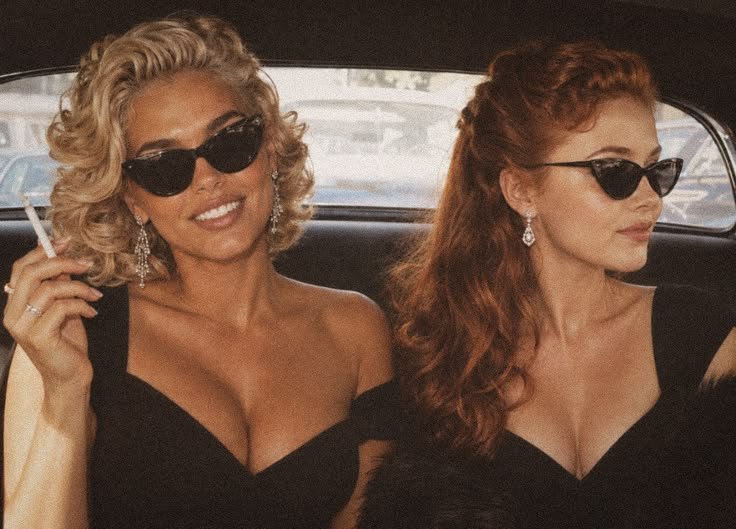
I also wasn't expecting a book called The Seven Husbands of Evelyn Hugo to make me think so much about what actually makes someone the love of your life. Obviously I won't ruin that part for anyone who hasn't read it, but the book's treatment of love is probably what stayed with me most. Love here isn't enough to magically make two people good for each other, nor does loving someone mean you always choose them correctly. People waste time. They get scared. They hurt each other. They come back. Sometimes circumstances really are bigger than two people, and sometimes we blame circumstances when the truth is that we were cowards. I found that painfully believable.

There is also something wonderfully uncomfortable about the way Evelyn talks about ambition. Women are so often allowed to be ambitious in fiction as long as they're still nice about it. Evelyn is not particularly interested in being nice about it. She knows what her beauty can do for her and uses it. She knows the world she lives in is unfair and, rather than waiting for it to become fair, figures out how to work within it. Sometimes that means she wins. Sometimes someone else pays for it. The book doesn't tidy that up for us.
I think that's ultimately why I loved it so much. I believed these people. By the end I wasn't particularly concerned with whether Evelyn was a good person or a bad person, which seems like a terribly boring question anyway. I cared about her. I understood why she made some of the choices she made and was horrified by others. When I closed the book, I felt that funny little grief you get after spending several days completely absorbed in someone else's life.
So yes, nine years late, I finally understand why everyone was talking about Evelyn Hugo because now, I can’t stop talking about her tooo.
If you've also avoided this book because you've seen it absolutely everywhere, consider this my encouragement to give in. Apparently millions of people can occasionally be right.
And if you can find a copy for five dollars, even better. Thrift books y’all!
My next read: The Master and the Margarita by Mikhail Bulgakov.